Last updated November 23, 2026
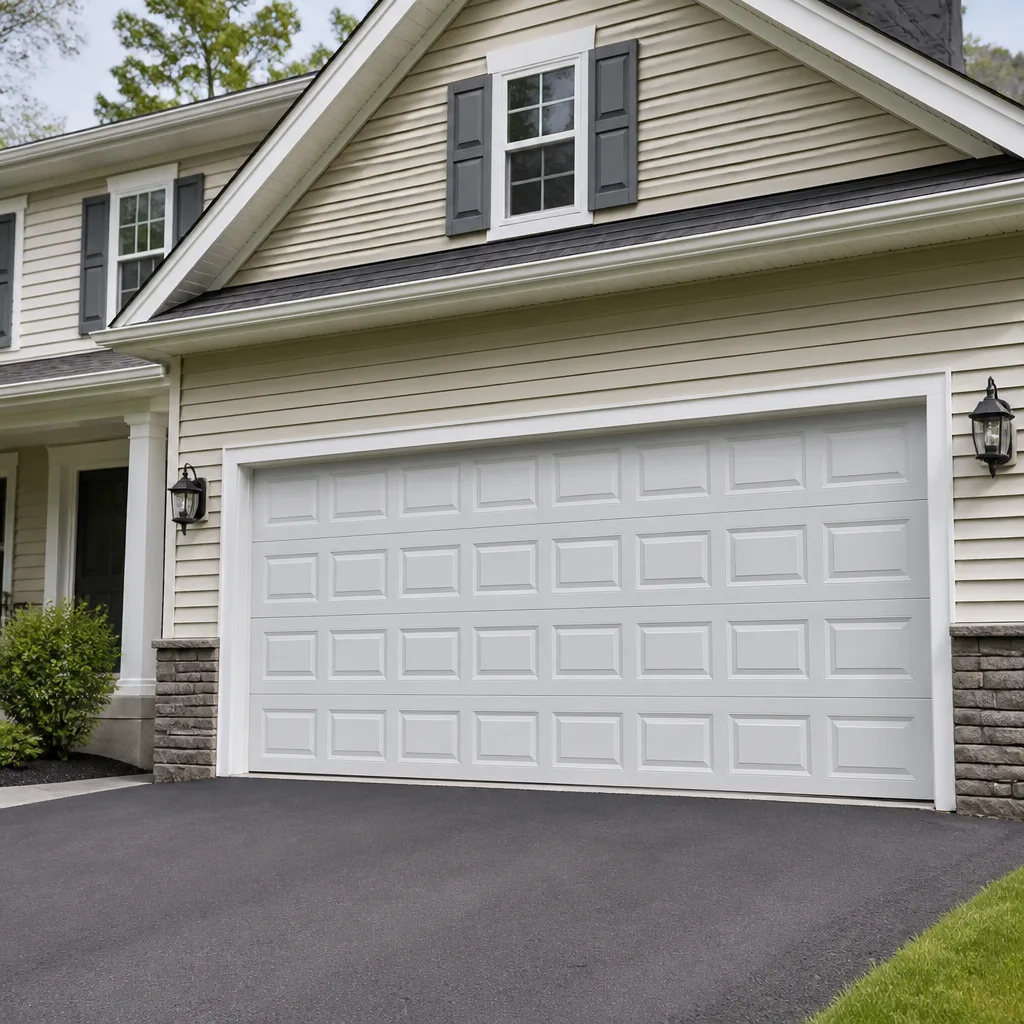 Raised-panel steel
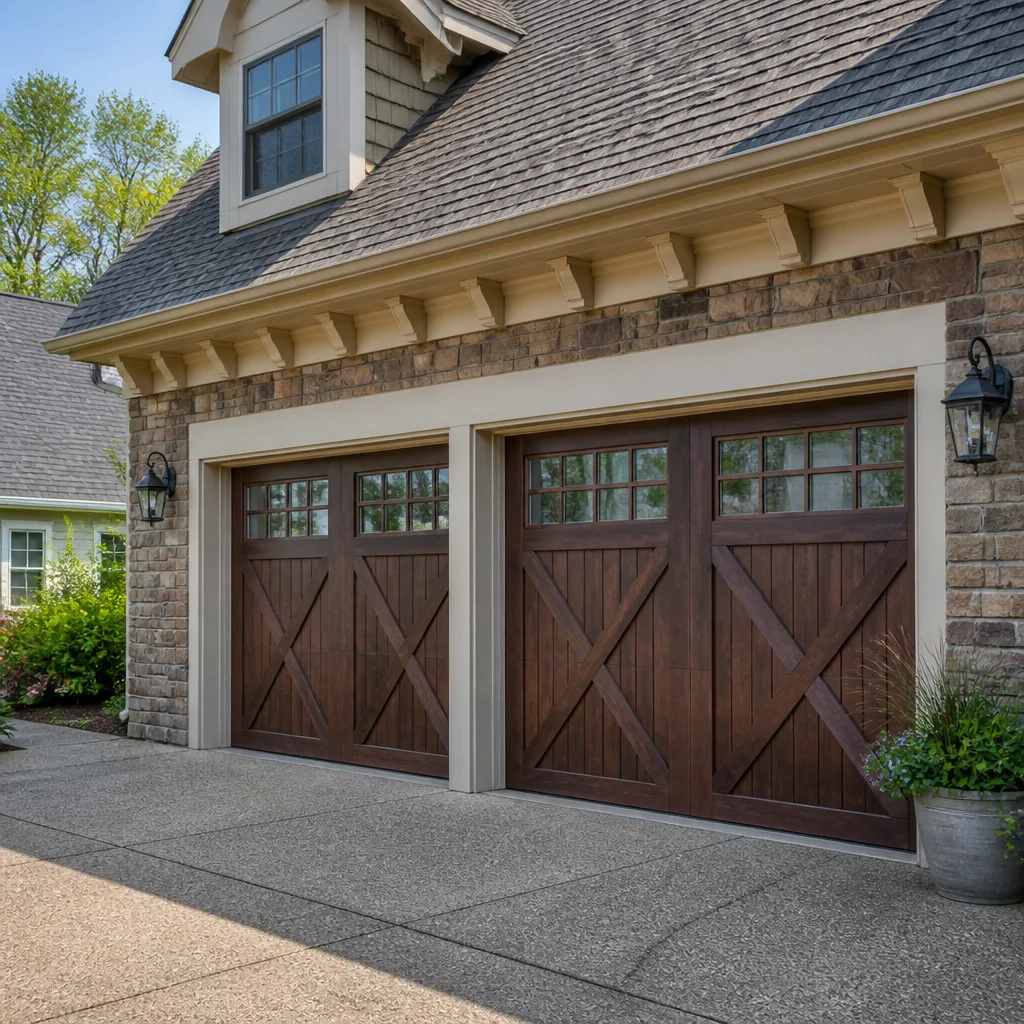 Carriage house
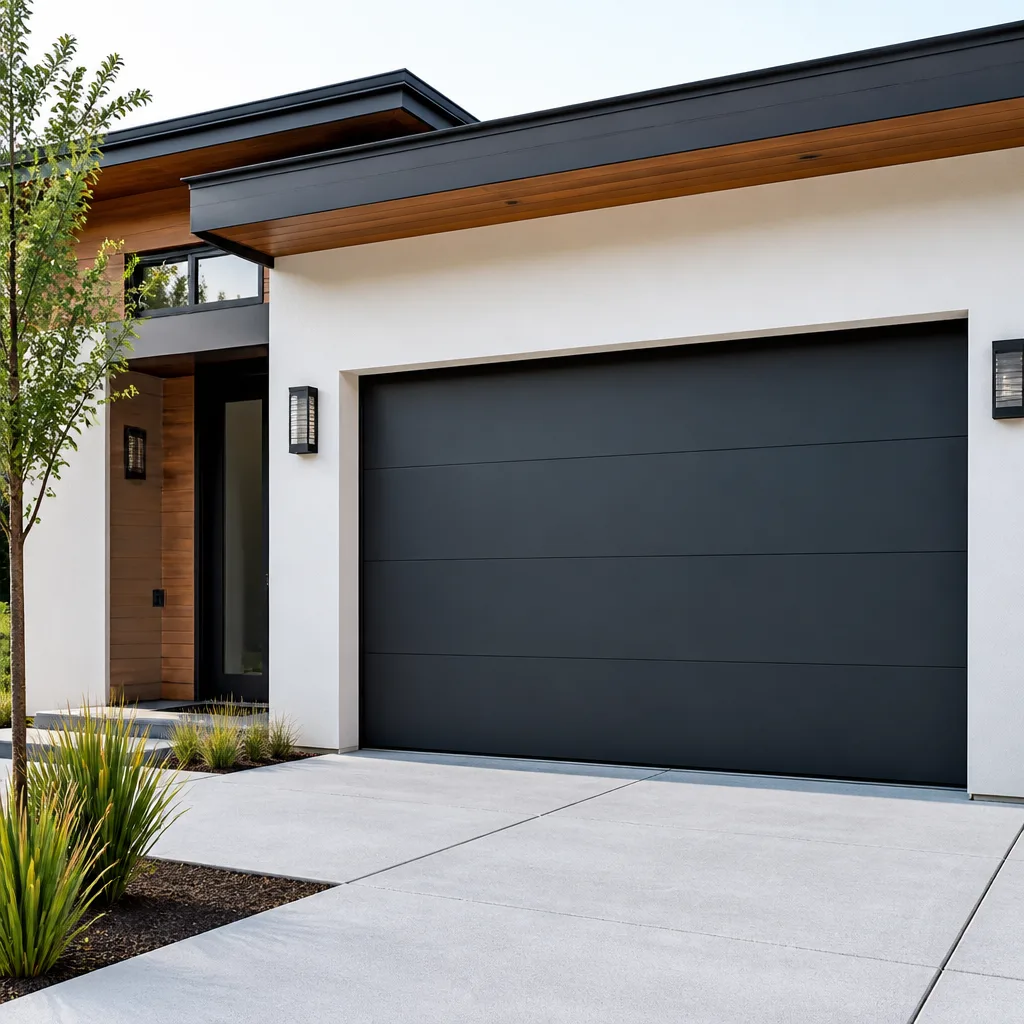 Modern flush
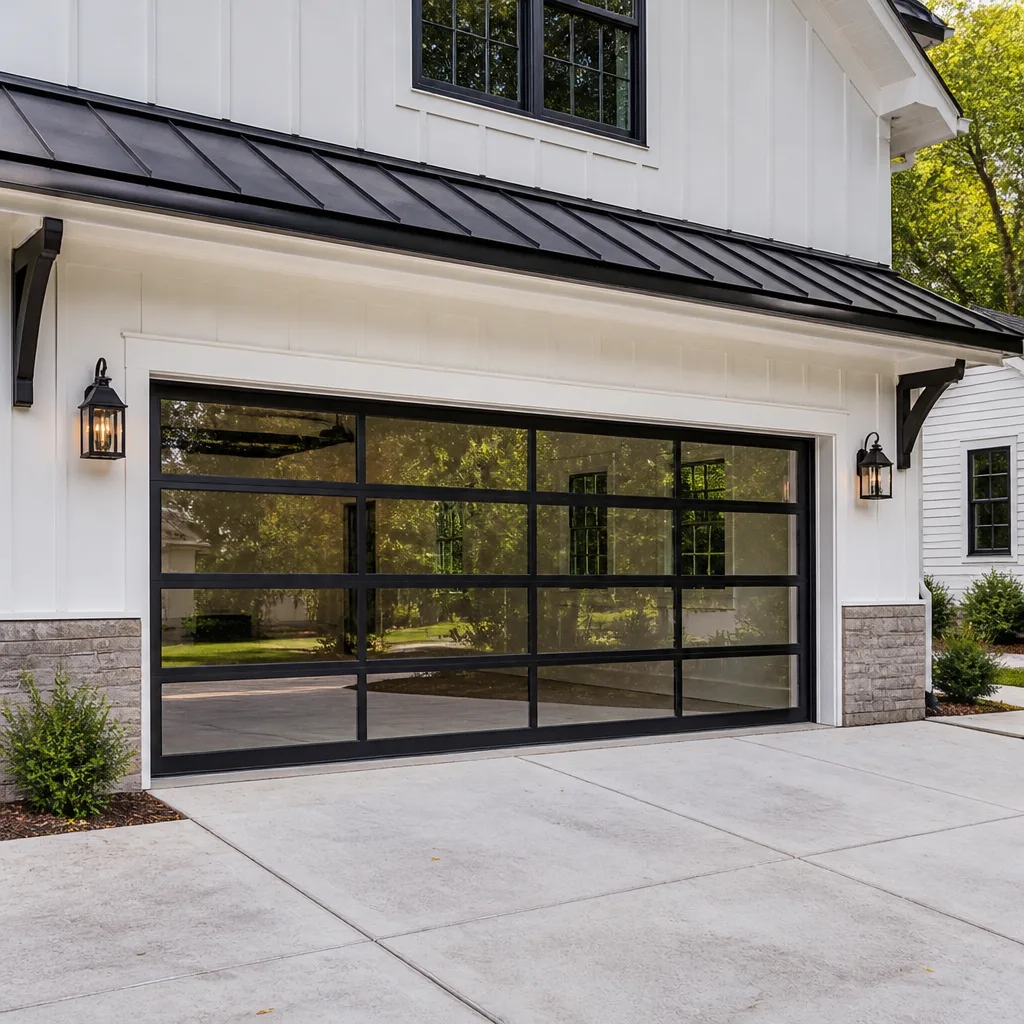 Full-view glass
 LiftMaster openers
 Chamberlain openers
Full 25-point door and opener safety check with every visit - springs, cables, rollers, tracks, and your LiftMaster or Chamberlain opener included
You get a price before we start. It does not change when the pro arrives.
Get your free estimateGarage Door Emergency Preparedness Guide for Lakeside Homes
During Hurricane Irma, thousands of Florida homeowners discovered their garage door’s manual release for the first time while trying to evacuate. That’s the wrong time to learn how it works. The red cord is hanging there, the power is out, the car is trapped, and the clock is running. Most garage door emergencies in Lakeside aren’t mechanical failures at all. They’re preparation failures, waiting for a storm, an outage, or a snapped spring to teach a lesson that five minutes of reading would have covered. This guide walks you through the specific scenarios Lakeside homeowners actually face: a power outage during an evacuation order, a broken spring that leaves the door halfway down, and post-storm damage you need to assess before anyone touches the opener. You’ll learn the manual release sequence, what to do when the door won’t stay up, how to secure a door from the inside when you have to leave, and what info to have ready when you call for help. Keep this somewhere you can find it when the lights go out.
Quick Answer
A garage door emergency in Lakeside usually comes down to three things: knowing how to use the manual release, knowing when not to touch the door, and having a garage door technician’s number ready before you need it. If the power is out, pull the red release cord to disengage the opener and lift the door by hand. If a spring is broken, do not force the door up; call for spring repair and switch to manual only if you can raise and prop the door safely. If your door is damaged after a storm, don’t run the opener until someone has checked whether it’s structurally sound. Call (877) 492-4021 for emergency garage door service in Lakeside.
Styles & brands we work with
- Raised-panel steel
- Carriage house
- Modern flush
- Full-view glass
- LiftMaster openers
- Chamberlain openers
Table of Contents
- How Do You Use the Manual Release on a Garage Door?
- What Do You Do When the Power Goes Out During an Evacuation?
- What Happens If a Spring Breaks and the Door Won’t Stay Up?
- How Do You Check Whether a Storm-Damaged Door Is Safe to Operate?
- How Do You Secure an Open Garage Door When You Have to Leave?
- Do You Need a Battery Backup Opener in Lakeside?
- What Information Should You Have Ready Before You Call?
How Do You Use the Manual Release on a Garage Door?
The manual release is a red cord hanging from the opener trolley, and pulling it disconnects the door from the motor so you can lift it by hand. That’s the whole mechanism. It’s simple, and it’s the single most important piece of garage door knowledge you can have in a hurricane-prone state like Florida. The trick is knowing what to expect when you pull it, because a door that’s connected to a working opener feels nothing like a door you’re lifting on your own.
Here’s the sequence. Walk through this once with the door down and the power on, so nothing surprises you in the dark.
- Find the red cord. It hangs from the trolley that slides along the rail. On most openers – LiftMaster and Chamberlain units especially – it’s a bright red handle with a tag attached.
- Pull straight down, firmly. You’ll feel a click as the trolley disengages. Don’t yank; pull with steady pressure.
- Lift the door by hand. Use the bottom handle or the lowest panel. A balanced door lifts with moderate effort. If it feels like you’re lifting dead weight, stop and read the broken-spring section below.
- Prop or secure the door open if you’re leaving the garage. Never trust an open door to stay open on its own, even for a minute.
- Re-engage the opener when the power returns. Close the door fully, then pull the cord again or run the opener once to reset the trolley. Some units re-engage automatically the next time the opener cycles.
One thing homeowners in Lakeside always ask: does the release work when the opener has a battery backup? Yes, and it still works when the battery dies too. The red cord is mechanical. It doesn’t care about power. That’s the whole point.
If you pull the cord and the door still won’t lift cleanly, don’t fight it. Something mechanical is wrong. That’s a call for garage door repair rather than a workaround.
What Do You Do When the Power Goes Out During an Evacuation?
When the power goes out during a storm in Lakeside, you have three options in order of preference: a battery backup opener that keeps running without grid power, the manual release to lift the door by hand, and – if the door won’t cooperate – securing the house from the inside while you get out through another exit. The worst thing you can do is stand there pulling the opener remote, waiting for it to work, while the evacuation window closes.
Here’s the outage protocol, in order:
- Try the remote once. If the opener doesn’t respond and the lights in the house are out, assume a power outage and move to step two.
- Pull the manual release. That’s the red cord from the section above. Now the door is disconnected from the opener and can be lifted by hand.
- Lift the door and drive out. Have someone hold the door open (or prop it) while the car backs out, then close it by hand slowly. Let it settle onto the ground.
- Lock the door from the outside using the manual slide lock most doors have on the inside track, or through the inside deadbolt on the connecting door. If your door has no manual lock, this is a gap worth fixing before storm season.
- Leave a note or text a neighbor if you want the garage door checked later, especially if you’re driving out with the door closed but not locked.
Power outages during hurricanes in Lakeside can last hours or days. If you’re staying home through an outage, plan on operating the door manually the whole time and remind everyone in the household not to press the opener buttons – hitting the wall button when the trolley is disengaged does nothing useful and can confuse the next person who tries to lift the door.
If the door feels heavy, out of balance, or won’t stay up, stop and call. This is exactly the scenario Garage Door Repair Lakeside handles during and after storms. Emergency garage door service is a real offering, not a marketing line – if your door is stuck and you can’t get the car out, that’s an emergency call.
What Happens If a Spring Breaks and the Door Won’t Stay Up?
When a torsion or extension spring breaks, the door loses most of its lifting assistance and can weigh well over a hundred pounds by hand. It will often feel like it lifts a foot or so and then slams back down. That’s the spring telling you the door is no longer safe to move by hand, and the right move is to stop, back away, and call for a trained technician. Springs are a safety issue, not a DIY fix.
Here’s what’s safe to do immediately:
- Don’t force the door up. If it drops on the way, you can bend panels, snap cables, and in the worst case get hurt. A door that’s already half down is in a safer position than one that drops from head height.
- Disconnect the opener if the door is up and you need to move the car. Pull the red cord, lift the door gently with one hand on the bottom handle and one on the panel, and prop it. If it won’t stay up, don’t try to hold it.
- Keep people, pets, and kids away from the door. A door with a broken spring can fail suddenly. Don’t let anyone walk under it.
- Call for spring repair and describe the symptoms: which side, whether the door is up or down, whether you heard a loud bang. That’s the info we need to arrive with the right springs on hand.
What you should not do: try to loosen, cut, or remove the broken spring yourself. Torsion springs and their cables are under extreme tension even when they look relaxed. Trained technicians use specific winding bars and techniques; injuries from homeowner spring fixes are serious and avoidable. This is one of the few garage door jobs where the risk isn’t “the door breaks more” – it’s personal injury.
Spring repair is a core service for us, not an upsell. When a Lakeside homeowner calls about a broken spring, we send a technician who handles high-tension torsion and extension springs directly, rather than referring it out. The repair is usually one visit. If you’re weighing a single spring versus a matched pair, remember the pair is almost always the right call – a door with one fresh and one tired spring will fail again soon. Our technicians have up to 11 years of experience and can walk you through the options on the phone before they arrive.
How Do You Check Whether a Storm-Damaged Door Is Safe to Operate?
A storm-damaged garage door is safe to operate only if it opens and closes without binding, the tracks are aligned, the panels aren’t deformed, and the springs look intact. If any of those fail, don’t run the opener – the motor can force the door through resistance and cause the damage to spread. In Lakeside, after a strong tropical system moves through, we get a wave of calls from homeowners who ran the opener before checking the door and made a small repair into a much bigger one.
Here’s the assessment sequence. Do it with a flashlight and gloves, before you touch the opener button.
- Look at the tracks. Stand at the door and sight up each vertical track. Both should be straight and parallel. If a track is bent or pushed in, the door can’t roll freely. Don’t run it.
- Check the panels. Are any bent, dented, or separating from the frame? A panel that’s off its hinges or bent means the door has lost its shape and will likely hit the tracks.
- Look at the springs and cables. A visibly separated spring, dangling cable, or loose drum is a hard stop. Call for repair.
- Pull the manual release and lift the door about a foot. It should move smoothly and stay where you put it. If it drifts down, the balance is off, and the opener shouldn’t be used.
- Push the door back down by hand, listen for scraping, and check that both sides land evenly. If one corner touches first, the door is out of alignment.
- Only then re-engage the opener and run it through one full open/close cycle while you watch.
Debris is the other post-storm issue. Twigs, palm fronds, and roofing material often collect in the track and cause the door to bind. Clear the tracks by hand with the door closed and the opener off. Never use the opener to push debris out – it will just jam harder. If the tracks are bent from impact, that’s a professional repair, not something to straighten with a hammer. The pivot points and rollers are pressed into the track, and bending it back usually warps the geometry.
If you’re unsure whether the door is safe, err on the side of calling. A short phone call and a technician visit is far cheaper than a door that comes off the tracks. garage door opener repair is also worth considering if the motor ran hard during a jam – it can stress the gears and the logic board.
How Do You Secure an Open Garage Door When You Have to Leave?
If your garage door is stuck open and you need to leave – for an evacuation, a medical appointment, or a work trip – the goal is to block the opening and prevent the door from moving, so the house isn’t left exposed and the door isn’t left in a dangerous half-lifted position. Getting the door fully down is always the first choice. If that’s not possible, securing it is the fallback.
Here’s what to do:
- Get the door down first, if you can do it safely. Pull the manual release, lift the door just enough to clear the car, drive out, then lower it by hand all the way to the ground. Even a door that won’t latch is better fully closed than half open.
- Use the manual slide lock on the inside of the track if the door has one. It’s often overlooked and always useful. If you don’t have one, a simple C-clamp on the track just above a roller will stop the door from sliding up.
- Lock the connecting door. Most Lakeside garages have a pedestrian door between the house and the garage. Lock it from the house side, and use the deadbolt if there is one.
- Talk to a neighbor if you’re leaving the door in any position other than fully closed. A quick heads-up prevents a small problem from becoming a long-term one.
- Call a technician for a same-visit fix if the door can be brought down but not reliably operated. The repair can happen while you’re away if you leave access.
If the door has to stay partially open (for example, damage prevents it from closing fully), the next step is a board-up from the inside using plywood and screws into the framing. This is a temporary measure, not a repair, but it keeps the house sealed and signals the door is meant to be shut. Don’t try to support the door with furniture or a car; a half-open door on a damaged spring can drop without warning.
Do You Need a Battery Backup Opener in Lakeside?
A battery backup opener is one of the most useful upgrades a Lakeside homeowner can make, because it keeps the door operating during a power outage – which is exactly the scenario this region sees during hurricane season. Instead of pulling the manual release in the dark and lifting the door by hand, the opener keeps running on its internal battery for a limited number of cycles, which is often enough to get one or two cars out during an evacuation. It’s not a substitute for knowing how to use the manual release, but it buys time and options.
How to know if you have one: look at your opener motor unit. Battery backup models usually have a battery door on the back or side, and the wall control will show a battery indicator. LiftMaster and Chamberlain make some of the most common backup models, and many installs from the last several years include them. If you’re not sure, check the model number on the motor unit label – the model is usually a sticker or plate on the back panel.
Battery backup models need the battery replaced periodically, independent of the opener. A dead battery in a backup unit means no backup. It’s worth checking every year before storm season. The test: unplug the opener from the wall, press the wall button, and see whether the door moves. If it doesn’t, the battery is either dead or missing. Plug the opener back in when you’re done testing.
For homeowners who want the door to keep working through an outage but don’t have a backup unit, the practical option is a manual release plan plus a written-out sequence of who in the household pulls the cord and who props the door. That’s not as convenient as a battery, but it works. If the opener itself is failing – not the battery, the whole unit – that’s a different call, and garage door opener repair is where the conversation starts.
What Information Should You Have Ready Before You Call?
Having the right details ready when you call for emergency garage door service in Lakeside saves time, gets you a more accurate troubleshooting answer on the phone, and helps the technician arrive with the right parts the first time. A stuck door isn’t the moment to be tracking down the model number on the opener. A little prep work, done now, turns a stressful call into a short one.
The information worth keeping handy:
- Door type and material. Sectional steel, aluminum, wood, or a full-view model? The brand matters too – Clopay, Amarr, Wayne Dalton, and Raynor doors each have their own panel and hardware profiles, and knowing your brand helps the technician load the right parts.
- Opener brand and model. LiftMaster, Chamberlain, Genie, and Craftsman cover most installs we see. The model number is on the motor unit label, or on a sticker inside the light lens cover.
- Spring type if you know it. Torsion (a horizontal bar above the door) versus extension (springs running along the top tracks). Most doors since the mid-1990s use torsion.
- What the door is doing. “Won’t open at all” and “opens halfway and stops” are different problems. If the door is stuck open, say so; that changes how we prioritize the call.
- Whether the power is on. Confirm your neighborhood actually has power before assuming the opener is broken. If the whole street is dark, a manual release is the answer, not a repair visit.
- Access. Gate code, dog in the yard, or a locked side door – say it up front so the technician arrives prepared.
We ask a few of these on every call, and the ones we hear most often are the brand and the symptom. Factory-familiar with 8 of the industry’s most common brands, we’ve seen the model numbers enough to know the pattern, but knowing the specifics still saves a trip. If you can find the opener model label before you call, you’re already ahead. If you can’t, don’t delay – just call.
One more piece of prep: keep the phone number somewhere in the garage, not just in your phone. When the power is out, phone batteries die, and a small card taped to the inside of the connecting door or the wall next to the opener button is worth having. (877) 492-4021 is the number to keep.
For spring-specific problems, garage door spring repair is the call to make, and it’s worth telling the dispatcher the spring is the issue rather than describing it as a general door failure. It routes the call to a technician who works on high-tension torsion and extension systems. For everything else, a general repair visit is the starting point.
If you’re in the market for a new door rather than a repair, this whole guide changes – installation is a measured, ordered, scheduled job, not an emergency visit. But knowing your current door’s brand and setup still helps, because a new install is easier to quote when we know what you have now.
Common Mistakes to Avoid
- Running the opener on a damaged door. After a storm, or any time you suspect the tracks are bent or the panels are deformed, don’t press the button. The motor will force the door through resistance and can push a panel off the tracks or burn out the opener gears.
- Standing under a door with a broken spring. A door that lost its spring is heavy and can drop suddenly, even if it looks stable. Keep everyone clear until someone trained has looked at it.
- Pulling the manual release with the door up. If the door is up when you pull the red cord, it can slam down. Always release with the door fully closed and the opener not moving.
- Assuming a battery backup opener doesn’t need maintenance. The battery needs to be replaced periodically, and a dead battery means no backup. If your opener hasn’t been tested under a real outage in over two years, test it.
- Leaving a stuck door half open while you evacuate. A half-open door invites wind and water damage and gives no real security. Get it fully down or secure it with a board-up before you leave, and let a neighbor know.
- Forgetting the manual lock. Many Lakeside homes have a slide lock on the inside of the garage door track and nobody remembers it exists. It’s the fastest way to secure a manual-released door before you drive away.
- Trying to fix a spring yourself. Torsion and extension springs are under extreme tension even when they look relaxed. Homeowner spring repairs cause serious injuries. This is a job for a trained technician, period.
See the difference
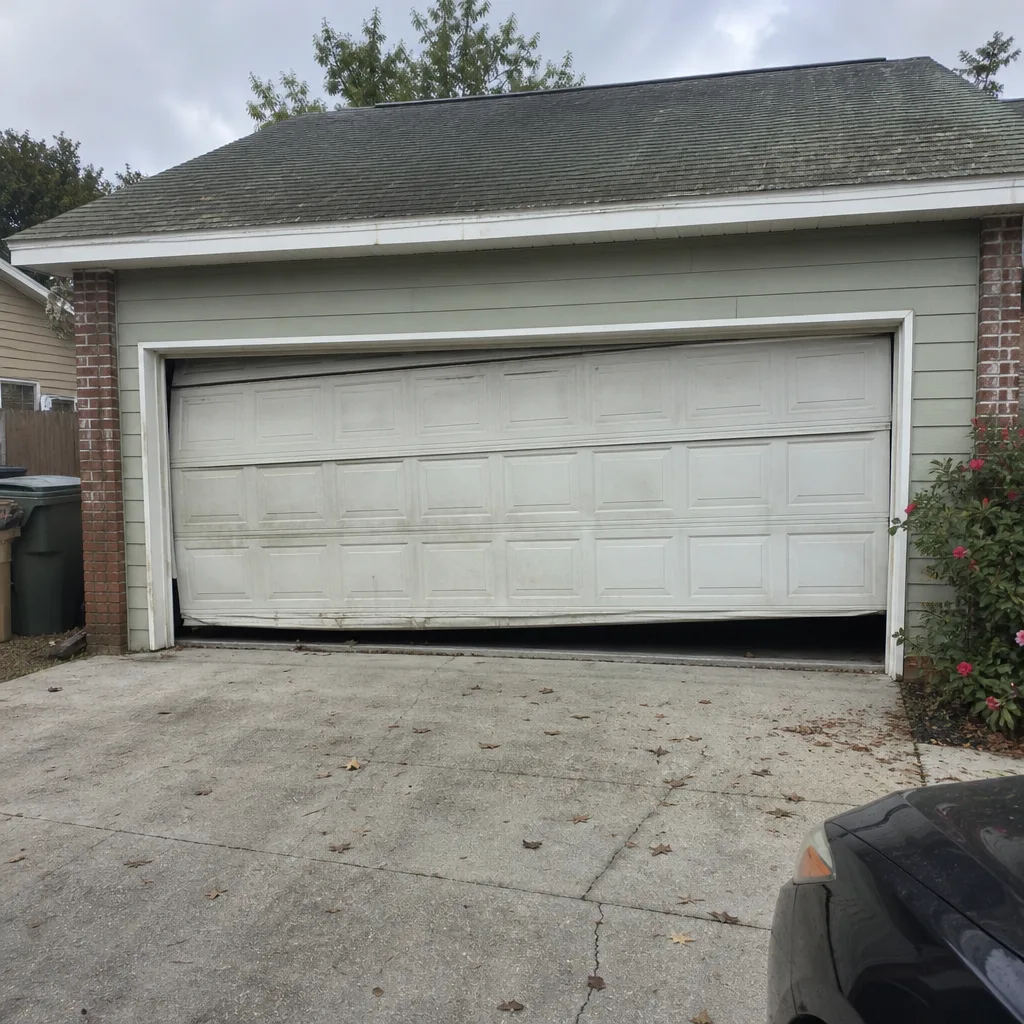 Before
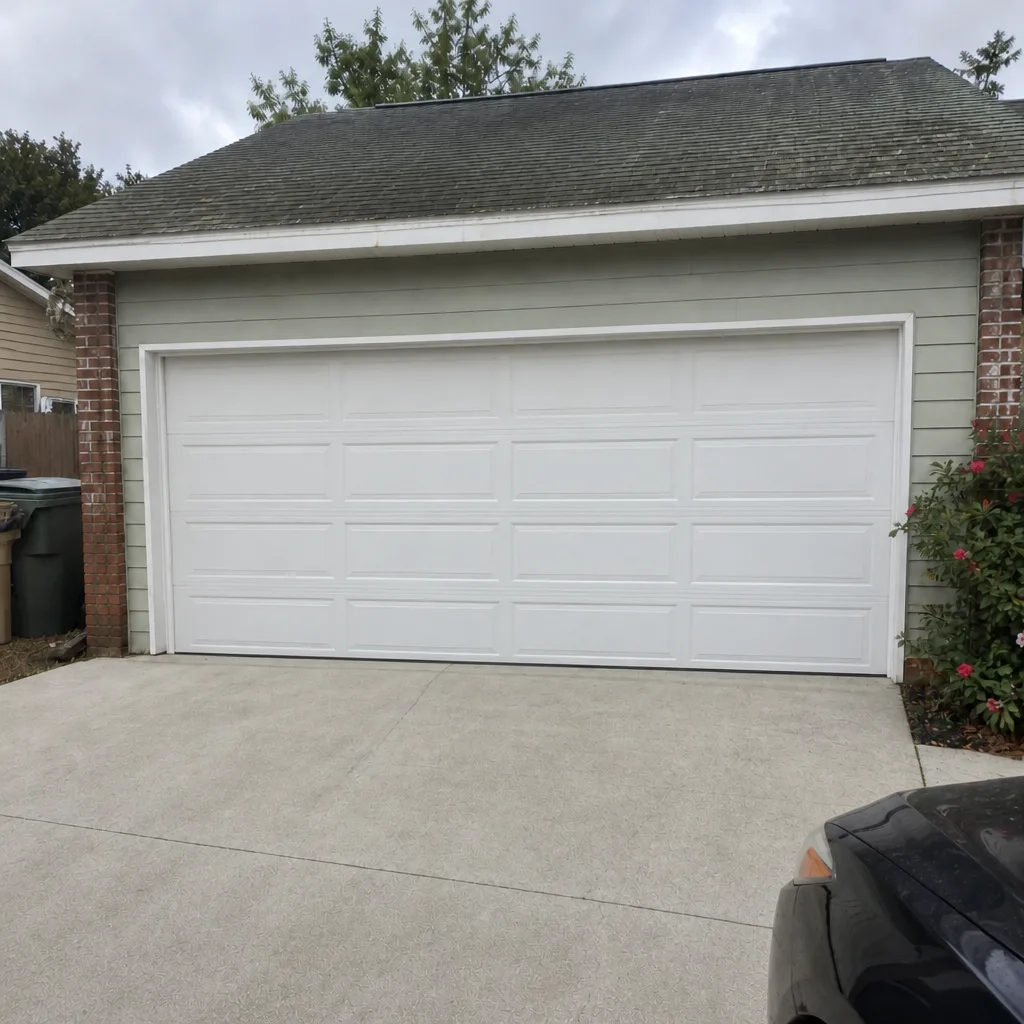 After
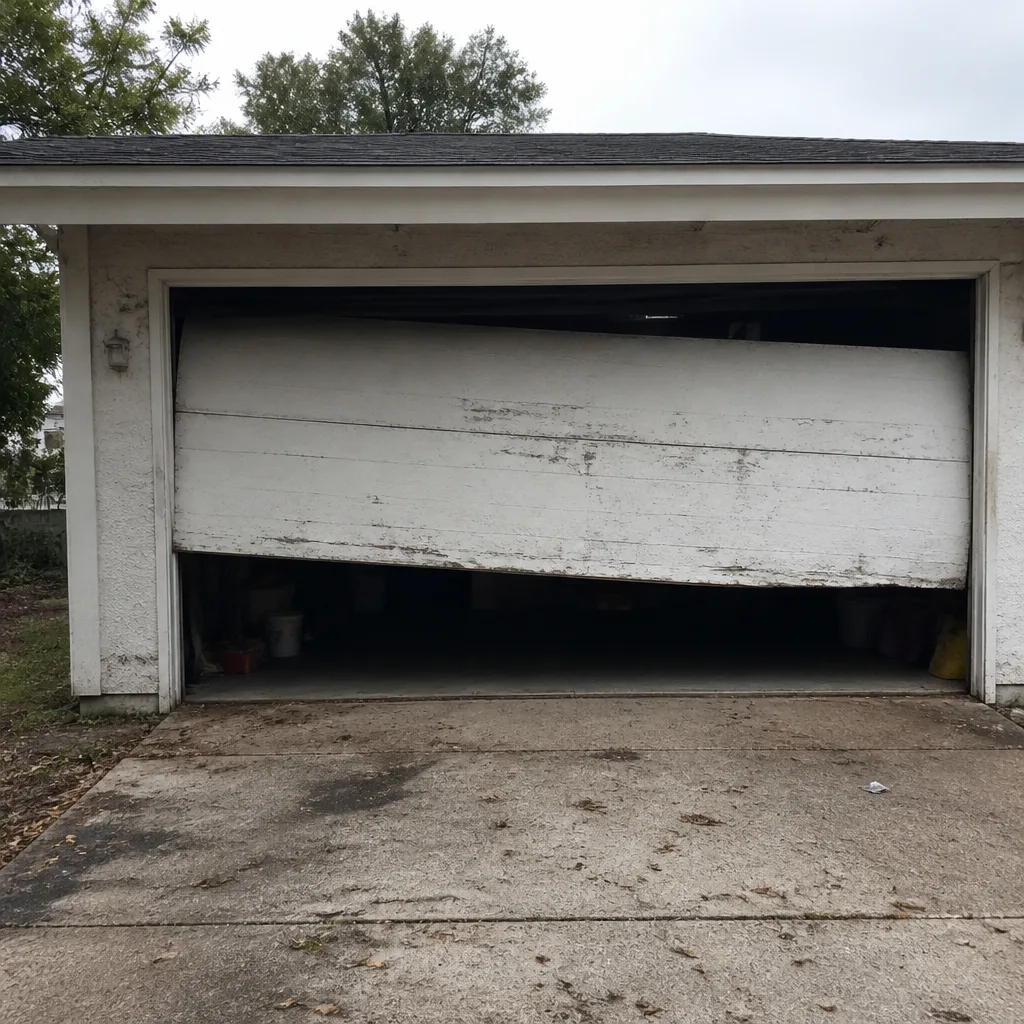 Before
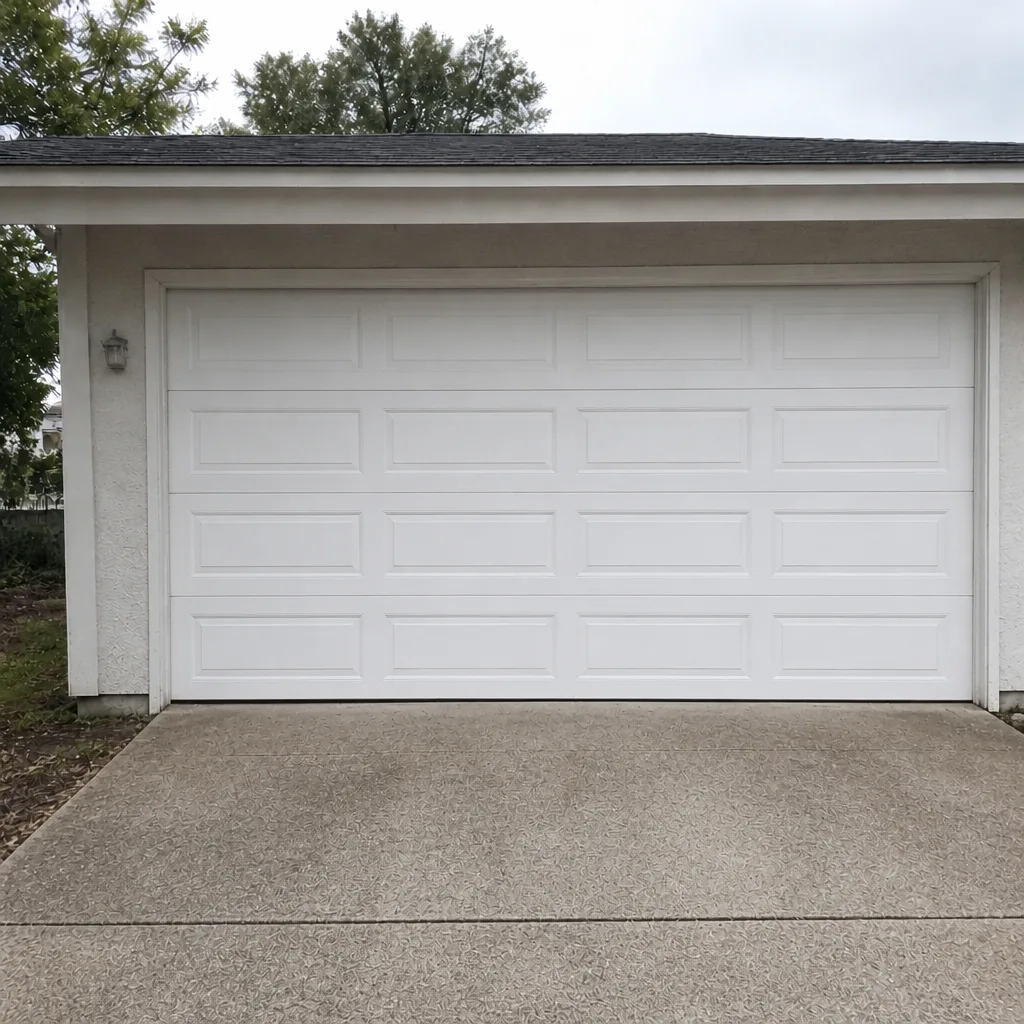 After
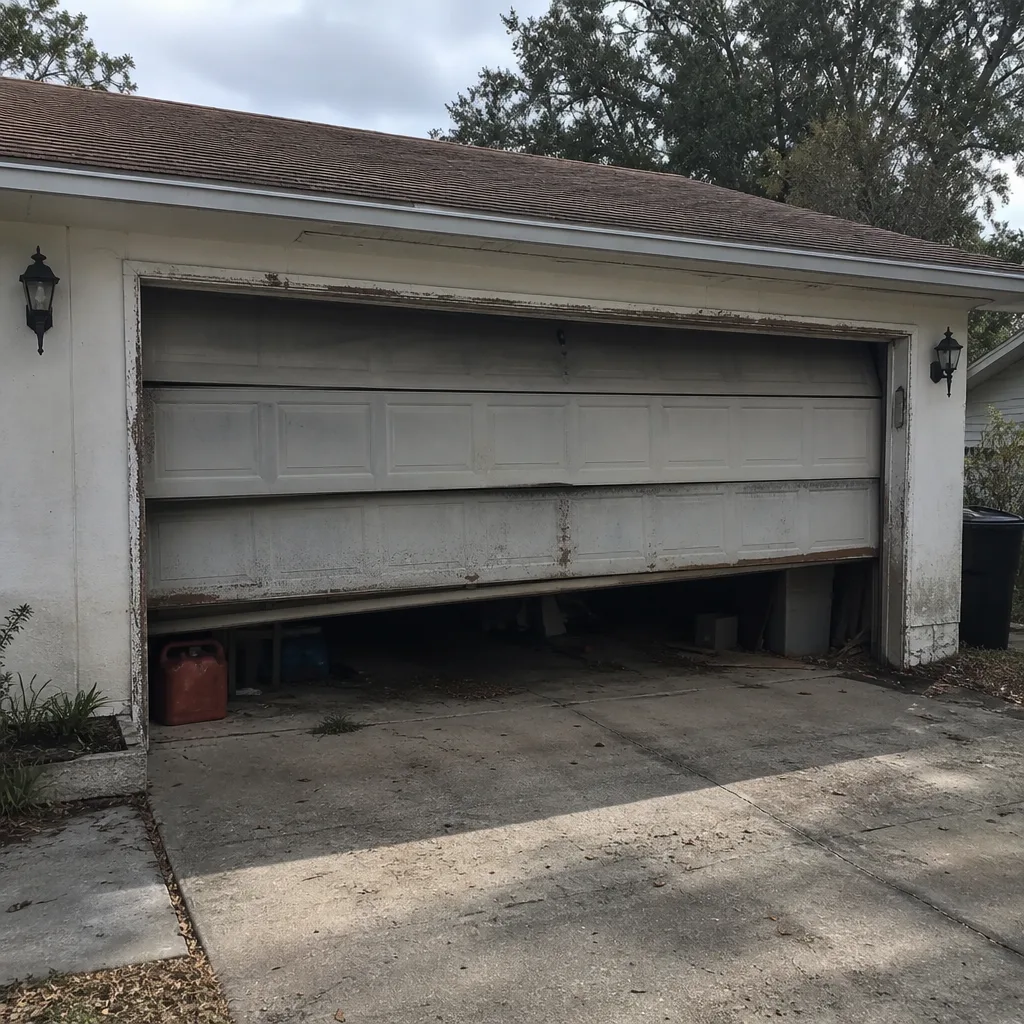 Before
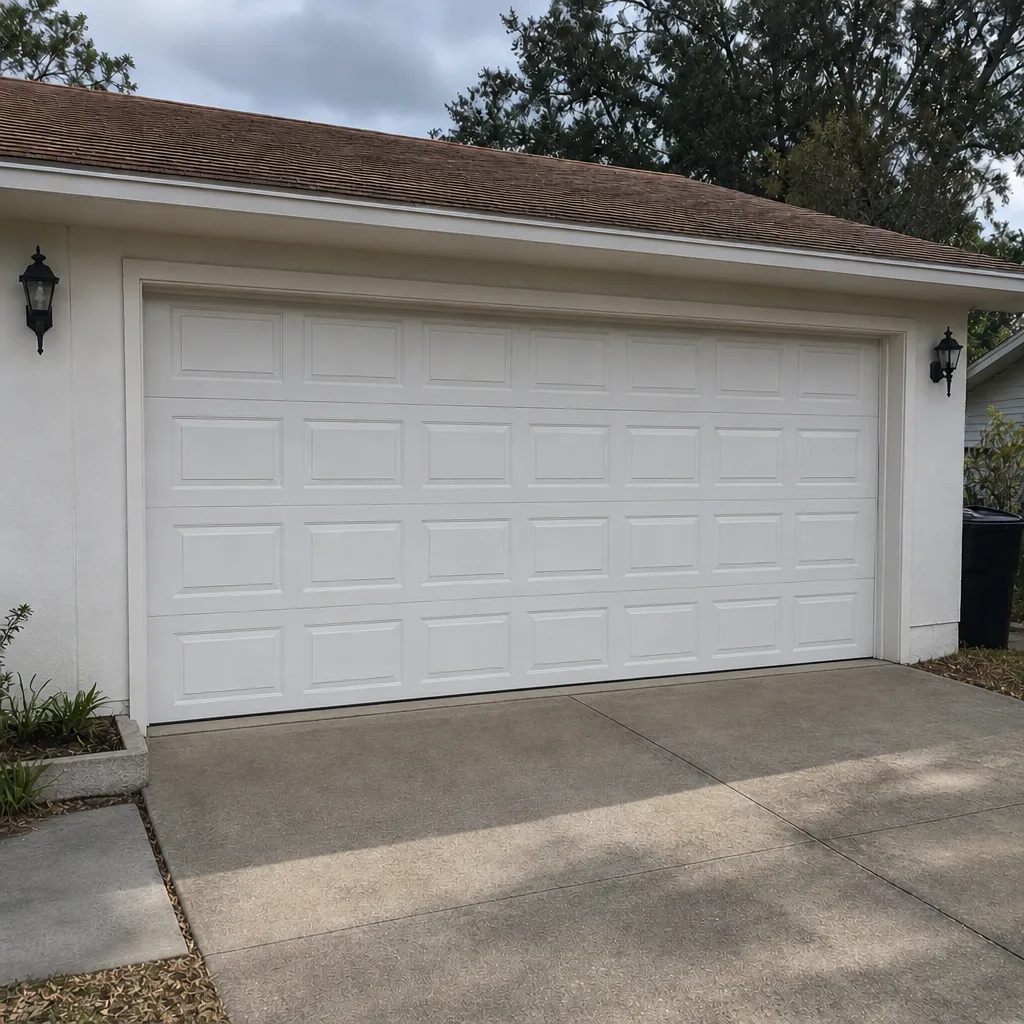 After
When to Call a Professional
Call a professional when the door won’t lift by hand after the manual release is pulled, when a spring has visibly broken, when the door comes off the tracks, or when you’re not sure whether it’s safe to run the opener after a storm. Call when the door is stuck open and you can’t safely get it down. Call when the opener runs but the door doesn’t move, or when the door moves partway and stops. Call when you smell burning from the motor unit. And call when you’re mid-evacuation and the door won’t cooperate – the whole point of an emergency garage door service is that someone answers when the door has failed at the worst possible moment. Lakeside homeowners can get a free estimate by calling Garage Door Repair Lakeside at (877) 492-4021.
Frequently Asked Questions
Emergency garage door service in Lakeside is quoted per job after the technician assesses the problem – the written estimate sets the final price, and you’ll see the number before any work begins. Common jobs include spring repair, opener repair, off-track doors, and panel damage, and each has its own price depending on the door and the parts involved. Call (877) 492-4021 for an exact quote – estimates are free.
Yes, and that’s exactly what the manual release is for. Pull the red cord hanging from the opener trolley, and the door disconnects from the motor so you can lift it by hand. Lift with both hands, keep your body clear, and never pull the release with the door up. If the door is too heavy to lift smoothly, a spring is likely the problem and you should stop and call.
Don’t try to bring the door down by force, and don’t let anyone stand under it. Pull the manual release, have someone hold the door if it can be held safely, back the car out if you need to, and call for spring repair as soon as you can. Keep the area clear of kids, pets, and traffic until a technician arrives. Springs are a safety issue, not a DIY fix.
The written estimate given at the time of service sets the price, and the work is quoted and agreed before any repair begins. If the technician finds more damage than expected, they’ll talk it through and update the estimate before continuing – nothing is added to a completed job without your approval. That’s the whole point of quoting in writing. Call (877) 492-4021 and we’ll walk through typical pricing on the phone.
We service the equipment in your garage, not just a preferred product line. LiftMaster, Chamberlain, Genie, Craftsman, Raynor, and most other major opener brands are common enough installs that a technician will know the system before arriving. If your model isn’t a brand we see every day, call and confirm – we’d rather ask than guess. Call (877) 492-4021.
It’s urgent when the door won’t close, when a spring is broken, or when you need the car out during an evacuation. Those are safety and access problems, not inconveniences. It’s less urgent when the door still operates but something sounds off – that’s a call for a scheduled repair, not an emergency visit. When in doubt, call and describe the symptom; we’ll tell you whether it’s a today problem or a this week problem. Call (877) 492-4021.
The Bottom Line
The most common garage door emergency in Lakeside isn’t a mechanical failure – it’s a preparation gap that shows up during a hurricane. Get to know your manual release now, before the power goes out. Test your battery backup opener before storm season. Keep the spring in mind as a hard stop, not a challenge. Know what your door and opener brand are, and keep the phone number somewhere the phone can’t lose it. And if something does go wrong – stuck door, broken spring, damaged panels after a storm – call a professional who knows the system and can get you back up and running today. Free estimates, written pricing, one call, full fix. Call (877) 492-4021 when you’re ready.
Written by the team at Garage Door Repair Lakeside.